USB-C won the connector war, but the intelligence lives in the protocol. USB Power Delivery (PD) is what lets one charger negotiate the right power for a phone, a tablet or a laptop — and its latest revisions change what buyers should expect from new products.
PD 3.1: beyond 100W
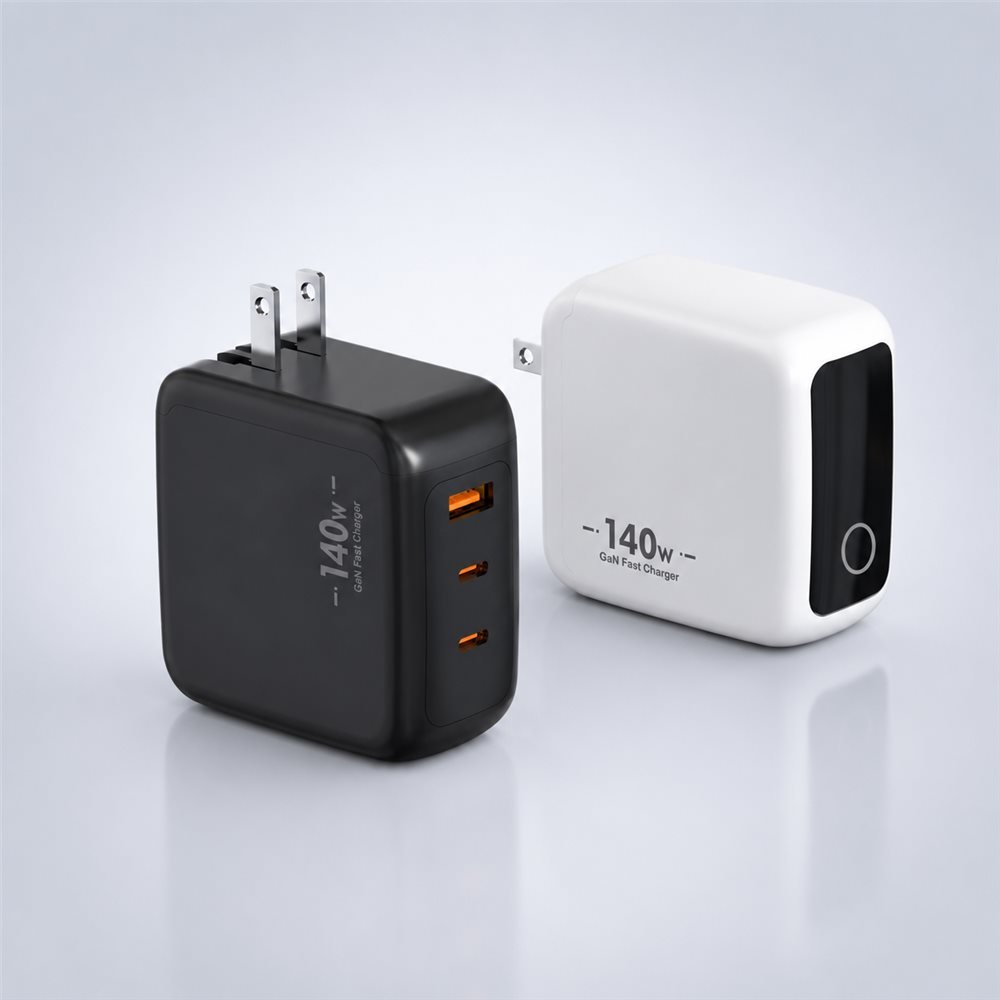
Classic PD topped out at 100W. PD 3.1 introduced Extended Power Range, lifting a single USB-C port to 140W and beyond — enough for large laptops that previously needed barrel-plug adapters. Our ZC504 140W screen charger is built on exactly this capability, with a display that shows real-time output per port.
PPS: precision instead of steps
Programmable Power Supply (PPS) lets the device adjust voltage and current in tiny 20 mV increments, continuously, while charging. Instead of jumping between fixed levels like 9V or 15V, the charger delivers exactly what the battery wants at that moment. The result: faster charging with less wasted energy — and less heat inside the phone, which protects long-term battery health. Samsung Super Fast Charging is the best-known PPS implementation.
What this means for your lineup
- 140W-class chargers can now replace laptop adapters — a real upsell category
- PPS support is becoming a checklist item for Android flagship compatibility
- Multi-protocol firmware (PD 3.1, PPS, QC, Apple, Samsung profiles) maximizes the devices one SKU can serve
Every current Rongjun model speaks the full protocol stack, from 30W pocket chargers to the 140W flagship — so whatever your customers plug in, it charges at the speed they paid for.