The GaN Charger Market: What the Reports Say, and Don't
We read three market research summaries side by side, compared their numbers, and checked the drivers against public sources and our own production.
Search for the GaN charger market and the first page is almost all market research firms, each with a headline number and a report for sale. Put three of them side by side and the first thing you notice is that they don't agree.
We make GaN chargers in Dongguan, so we have a practical interest in where this market is going. This article compares what the reports say, explains why their numbers differ, and separates the trends you can check yourself from the ones you have to take on trust.
Three forecasts, three answers
| Research firm | Market size (base year) | Forecast | Annual growth |
|---|---|---|---|
| BCC Research (Nov 2025) | US$1.3 bn (2024) | US$3.7 bn by 2030 | 20.8%, 2025 to 2030 |
| GMI (Oct 2026) | US$1.38 bn (2025) | US$7.04 bn by 2035 | 17.8%, 2026 to 2035 |
| Market Research Future (Sep 2026) | US$1.07 bn (2024) | US$11.1 bn by 2035 | 23.9%, 2025 to 2035 |
The starting points are close: all three put today's GaN charger market at somewhere between US$1 billion and US$1.4 billion. The forecasts are not. For 2035, Market Research Future's figure is more than half as large again as GMI's. For 2030, BCC Research says US$3.7 billion and GMI's analysts say US$3.41 billion, which is closer.
Why the numbers differ so much
This isn't necessarily anyone being wrong. Market reports differ for a few ordinary reasons:
- What counts as the market. Market Research Future's segments include industrial equipment, automotive and aerospace; BCC Research includes EV-related charging. A report that counts only phone and laptop chargers will be smaller.
- Retail or factory value. Counting chargers at retail price gives a much larger figure than counting them at the price brands pay factories.
- Growth assumptions. A few points of annual growth, compounded over ten years, make a very large difference to the end figure.
So use these reports for direction, not precision. All three say the same thing about direction: strong growth, led by USB-C devices and multi-device charging. For planning a product range, that's the useful part.
The drivers you can check yourself
The reports list similar drivers. Some of them you can verify from public sources, which makes them more useful than any forecast.
1. USB-C as the legal standard
In the EU, phones, tablets and many other devices have had to use USB-C since 28 December 2024, and laptops since 28 April 2026. From 14 December 2028, chargers themselves will need a USB-C port and detachable cable under Regulation (EU) 2025/2052. GMI also points to India's USB-C requirement for new smartphones and tablets. One port type means one charger can serve many devices, which favours compact, multi-port chargers. Our EU common charger guide covers the rules.
2. Chargers sold separately
The same EU rules mean consumers can buy devices without a charger. The European Commission estimates this saves consumers at least €250 million a year on chargers they don't need. Fewer chargers in boxes means more chargers bought on their own, where buyers choose by size, power and ports.
3. More power over USB-C
USB Power Delivery 3.1 allows up to 240 W over a USB-C cable. Laptops, and even some gaming devices, now charge over USB-C. GMI expects this to push demand towards high-power and multi-port chargers, which is where GaN's advantages are largest.
4. GaN parts becoming mainstream
GMI cites Navitas Semiconductor's 2024 annual report: GaN had reached about 10% adoption versus silicon in mobile chargers, and Navitas had shipped more than 240 million GaN devices by December 2024. More supply generally means lower prices, which brings GaN into cheaper chargers.
Where GaN's advantage is smaller
The most useful detail in these reports is one that GaN sellers rarely mention. GMI cites testing by the IEA's 4E Power Electronic Conversion Technology Annex: at 30 W, GaN and silicon chargers reached similar efficiency, around 90%. At 60 W, GaN chargers reached about 92% against about 90% for silicon.
That matches what we see in design. At low power, the difference between GaN and silicon is modest, and silicon's lower part cost keeps it competitive. GMI accordingly forecasts the slowest growth in the low-power segment. At higher power, the gap in size and heat widens, and GaN becomes the obvious choice. Our GaN vs silicon guide explains why.
Where the market is heading
Putting the reports and the public facts together, a few directions look clear:
- From one device to several. Multi-port chargers that replace two or three old ones.
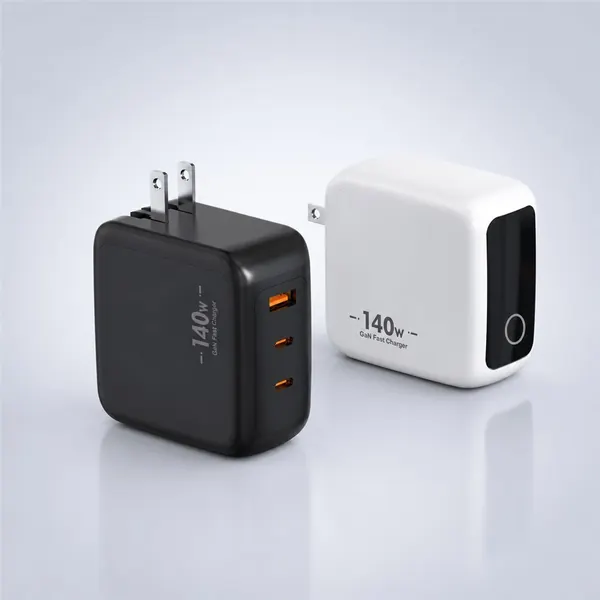
- From phone to laptop power. 65 W, 100 W and 140 W chargers that handle a laptop and a phone together.
- From accessory to standard equipment. GMI expects professional and business buyers to become a steadier source of demand than consumer upgrades alone.
- Phones and tablets stay the biggest segment. BCC Research puts them at 55.4% of the market in 2024.
What the reports can't tell you is which specific products will sell. For that, look at real sales data. Our best-selling phone accessories guide looks at Amazon UK's lists.

Risks the reports point to
Growth forecasts get the headlines, but GMI's summary also lists restraints worth taking seriously:
- Price sensitivity at the low end. Where GaN and silicon perform similarly, many buyers simply choose the cheaper charger.
- Markets without USB-C rules. Outside the EU and India, GMI notes limited retail presence and awareness of GaN in some emerging markets, so adoption there depends on brands and retailers explaining the benefits.
- Dependence on device cycles. Much charger demand follows phone and laptop upgrades, which can slow in a weak economy.
BCC Research adds cost and compatibility as challenges: older devices without fast-charging protocols don't benefit from a new charger's speed, so buyers need clear information before they purchase.
How to use a market report before you buy one
Full reports cost thousands of dollars; GMI's starts at over US$4,000. Before buying one, check a few things in the free summary:
- The definition. Does it count only phone and laptop chargers, or also industrial, automotive and EV charging?
- The segments. Are the wattage and region splits the ones you actually need?
- The sources. GMI's summary cites Navitas filings, IEA testing and EU figures, which you can check. Reports that cite nothing are harder to trust.
- The date. A forecast from before the EU laptop rules or PD 3.1 adoption will be out of date.
For most brands and importers, the free summaries plus real sales data are enough to make product decisions. Spend the money on samples instead.
What it means for charger brands
| Segment | Competition | How to stand out |
|---|---|---|
| 20 to 35 W phone chargers | Very crowded; silicon competes on price | Size, PPS for Samsung, design, bundles |
| 65 W chargers | Busy, but more room | Multi-port, thin or travel designs |
| 100 to 140 W chargers | Fewer sellers, higher prices | Ports, power sharing, display, laptop focus |
For a new brand, competing only on price in small phone chargers is hard. A clearer niche, such as a thin charger for laptop bags, a three-port desk charger or a 140 W laptop charger, gives you something to say beyond price. Our guide on starting a charger brand goes through the steps.
Whatever the market does, the same basics decide whether your chargers get good reviews: the right protocols, consistent quality and proper documents. Those don't show up in market reports, but they show up in returns.
What we see from the factory floor
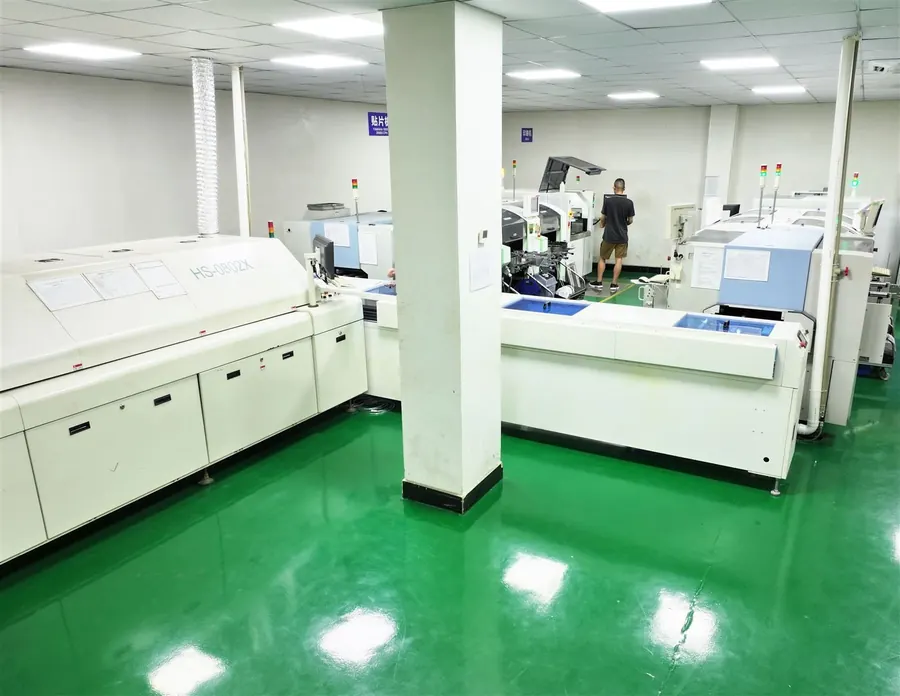
We make more than 100,000 chargers a month across 14 GaN models from 30 W to 140 W, and silicon chargers when a customer asks for them. We can't tell you the size of the global market from that. But we can tell you what our customers ask for, and it lines up with the drivers above: USB-C only or USB-C plus one USB-A, USB PD with PPS, more ports, and more power for laptops.
Our range reflects that. Every model supports USB PD, PPS and Quick Charge, and prices run from about US$2.92 a piece for our smallest 30 W to about US$17 for the 140 W with a display, from 500 pieces per model with your logo. Every charger is hi-pot and aging tested, and the warranty is 24 months.
 Inside our GaN charger factory
FAQ: GaN charger market
How big is the GaN charger market?
How fast is the GaN charger market growing?
What is driving GaN charger growth?
Will GaN replace silicon chargers completely?
Which region is the biggest GaN charger market?
Is it a good time to start a GaN charger brand?
Do you make GaN chargers for brands?
Planning a GaN range?
Tell us your market and the gap you want to fill. We'll suggest models and send free samples for up to two of them.
Get a quote