
How to Start a Phone Charger Brand
From the factory that makes chargers for other people's brands: how to pick the niche and the first product, what the first order really costs, and the pricing maths most guides leave out.
Most charger brands you see on Amazon didn't design a charger. They found a factory, picked a model, put their name on it, and worked hard on everything around it: the listing, the photos, the price, the reviews. That's not a shortcut. It's how the category works.
We're one of those factories. At Rongjun we've made chargers for more than 200 brands, from one-person Amazon sellers to regional distributors. If you're wondering how to start a phone charger brand, here's what we've seen work, with real numbers from our price list.
Why 2026 is a good time
Two changes have opened the market up. Since December 2024, phones, tablets, headphones and similar devices sold in the EU must use USB-C, and since April 2026 laptops too. The same EU rules let people buy a new device without a charger in the box. The European Commission expects that to save consumers at least €250 million a year on chargers they don't need. The flip side is that a lot of people now buy their charger separately, and they want one that works with everything they own.
At the same time, GaN chargers have become affordable to make. A 65W charger that used to be a brick is now small enough to carry in a pocket. That's a product people are happy to pay a little more for, which is exactly what a new brand needs.
Pick a niche, not just "chargers"
"USB-C charger" on its own is crowded and dominated by brands with huge advertising budgets. A small brand does better with a sharper angle. A few that work:
- Travel. One charger with clip-on US, EU, UK and AU plugs. Our CB ultra-thin series was designed around this.
- Laptop users. 65W to 140W chargers sold as a smaller, lighter alternative to the laptop's own adapter.
- Desk and family. Three-port chargers for people charging a laptop, phone and earbuds from one socket.
- A region. A brand built for one market, with local plugs, local language packaging and local support, can beat a global brand there.
- Corporate and gifts. Branded chargers for companies, events and promotions.
Choose your first product
Start with one or two models. More SKUs means more stock, more photos, more listings and more ways for money to sit on a shelf. These are good first products from our own range:
| Model | Who it suits | Factory price per piece |
|---|---|---|
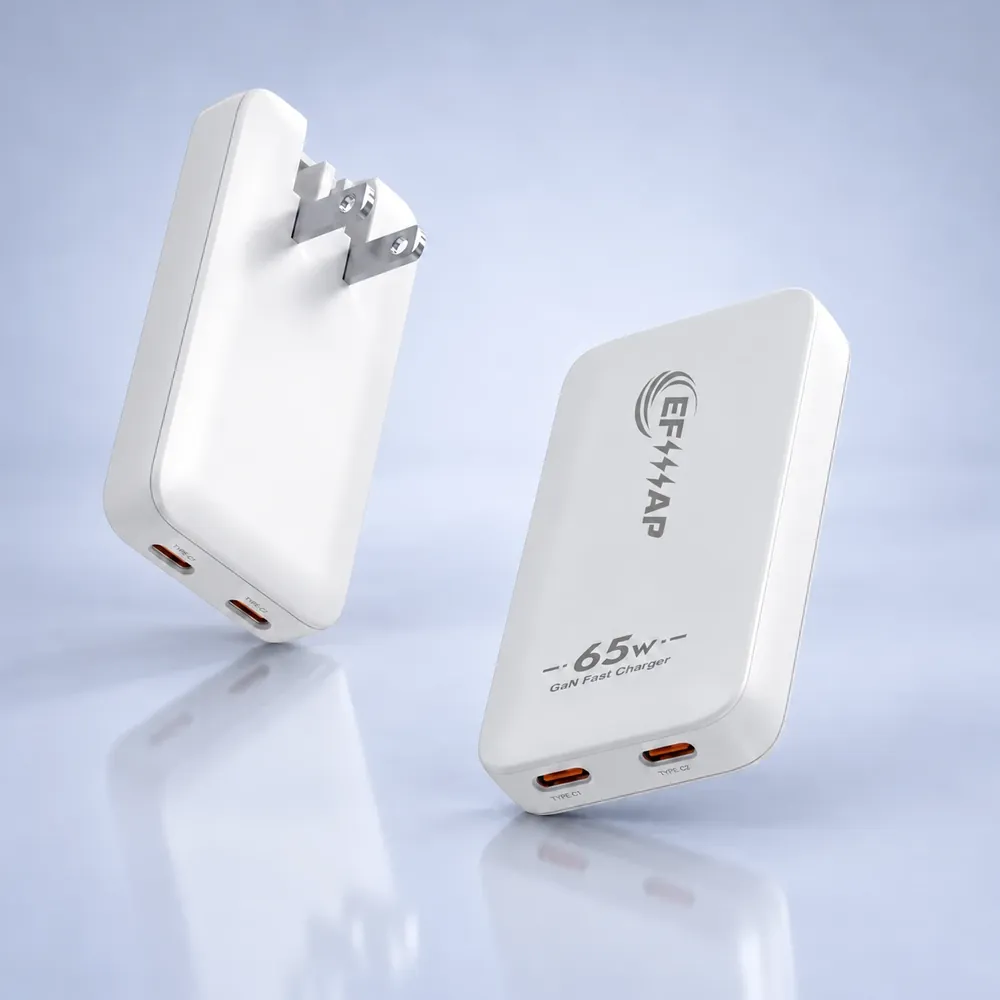
| XFC 65W, 1 USB-C | Laptop + phone users, compact | US$5.08 – 5.69 |
| XFC 35W, 1C / C+A / 2C | Phone and tablet buyers, two devices | US$3.46 – 4.08 |
| CB 65W II ultra-thin | Travel, interchangeable plugs | US$6.15 – 6.46 plus adapters |
| MB 100W, 2C + 1A | Laptop-first, desk charging | US$9.08 – 11.23 |
Prices for the charger body, by quantity and plug type. Your logo has no setup fee; retail boxes and custom colours are extra.
We'd steer most new brands away from the cheapest 20W cube. It's the most crowded part of the market, and the margin is thin enough that one bad month of returns can wipe it out.
Budget the first order
Here's what a lean first order looks like with one model. The goods are from our price list; everything else depends on your own quotes, so we've left those as lines to fill in rather than inventing numbers.
| Item | Cost |
|---|---|
| Samples (free, 1 per model, up to 2 models) | Courier only |
| 500 × XFC 65W with your logo | about US$2,540 – 2,850 |
| Packing: strips or plain white boxes | Included / small extra |
| Your own printed retail box | From 1,000 pcs, quoted per design |
| Freight, clearance, import VAT | Your forwarder's quote (VAT reclaimable if registered) |
| Trademark | UK from £170 online for one class; EU from €850 |
| Logo, packaging design, photos | Designer and photographer quotes |
| Marketing for the first months | The line most people underestimate |
If cash is tight, a 300-piece first trial is possible on request, at a slightly higher unit price. Starting with plain white boxes and moving to your own printed box on the reorder also keeps the first order small. Our MOQ guide explains the trade-offs.
Find the factory
You want a factory, not a trading company, and one that's set up for brands: logo, packaging, documents in order, and willing to show you the line. Two of our guides cover this in detail: how to find a charger manufacturer in China and factory vs trading company. The short version: check the business licence, check whose name is on the test reports, order samples and take a video tour.
Name, trademark, logo and box
The name
Short, easy to say in your main markets, and free to use. Check the trademark registers in the countries where you'll sell, the domain, and the marketplaces, before you fall in love with it.
The trademark
Register it. Amazon's brand programme needs a registered or pending trademark, and without one, anyone can copy your listing. In the UK, an online application to the IPO starts at £170 for one class; an EU trade mark from the EUIPO starts at €850 for one class. Check the current fees on the official sites before filing.
The logo and the box
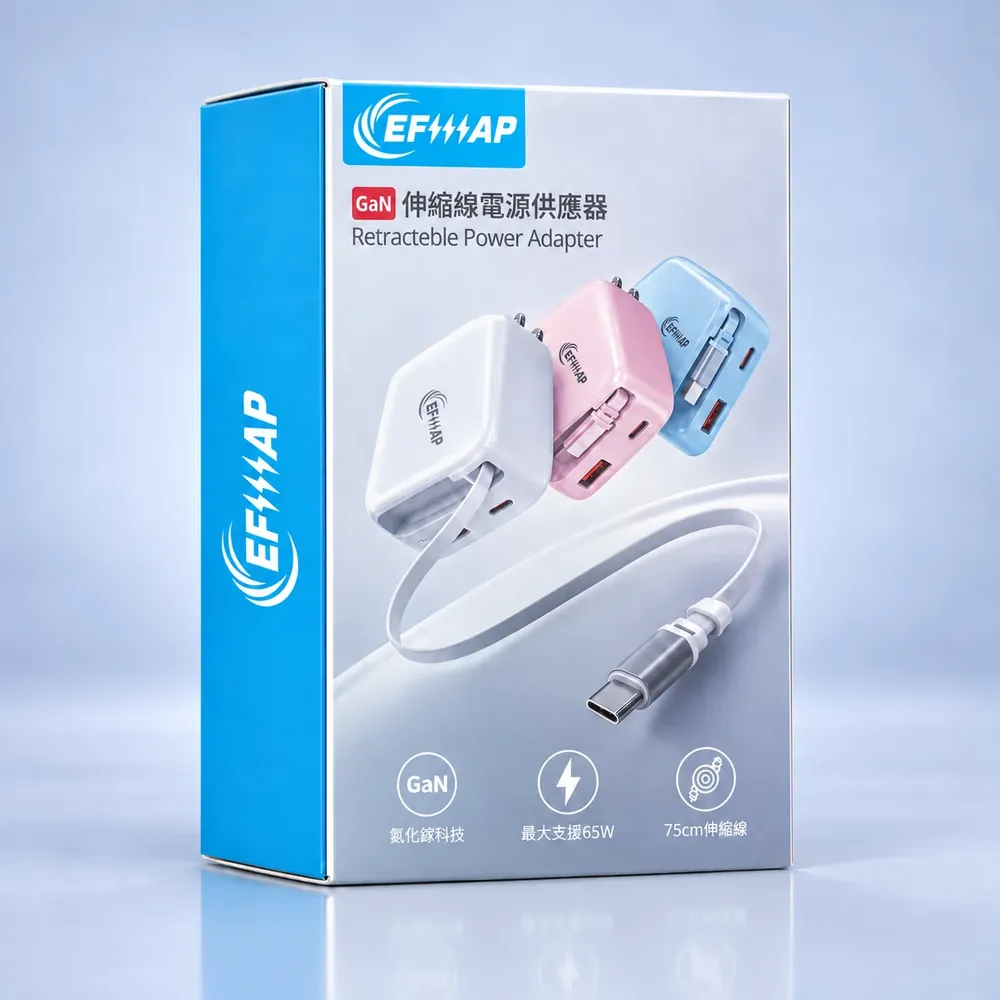
Send us a vector file and we'll send a free mockup of the charger with your logo before anything is made. Printing your logo has no setup fee. For the box, there are two ways: plain white boxes with a label for the first run, or your own printed retail box from 1,000 pieces. We can do UV-printed premium boxes or matte boxes.
Compliance before you sell
A charger is a mains-powered electrical product, so the paperwork matters. For the UK and EU you need CE marking backed by safety and EMC test reports, RoHS, the ecodesign rules for chargers, your details as importer on the product or box, and a responsible person in the EU under GPSR. For the US, FCC. Our European certifications guide goes through each one.
The factory's test reports cover the charger if they're for the exact model. Your part is to keep copies, give the factory the details to print on the box, and register for WEEE and packaging schemes in the countries where you sell.
Where to sell first
- Amazon is where most new charger brands start, because buyers are already searching there. Fees and advertising are the price of that traffic.
- Your own shop (Shopify or similar) gives better margins and your own customer list, but you have to bring the visitors.
- Local retail and phone shops can take steady volume if you have contacts, at lower margins and with longer payment terms.
- Corporate orders (branded chargers for companies and events) can be very profitable and don't depend on reviews.
Pick one to start and do it properly. Our Amazon charger guide covers the first channel most brands use.
Price it so it actually makes money
This is where most first brands go wrong. ietcharger's guide works out profit as retail price minus factory price, shipping and a little tax, and gets a big number. That leaves out the marketplace's fees, VAT on the sale, returns and advertising, which together are usually bigger than the factory price.
Here's the shape of the sum for one charger sold on a marketplace in the UK. Replace the assumptions with your own; the point is the structure, not our guesses.
| Per charger | How to work it out |
|---|---|
| Selling price | Your price, including VAT |
| − VAT on the sale | Price ÷ 6 at 20% VAT |
| − Landed cost | Factory price + freight + clearance, per piece |
| − Marketplace fees | Referral fee (a percentage) + fulfilment fee per unit |
| − Returns and damages | A few percent of sales |
| − Advertising | Often the biggest line in the first months |
| = What you keep | Before your own time and overheads |
Run it at two prices. With a landed cost of around £5, a 65W GaN charger at £15 leaves almost nothing once VAT, fees and ads are paid. The same charger at £25 to £30 can leave a healthy margin, because the landed cost and the fulfilment fee don't change with the price. Price is usually the biggest lever a new brand has.
The first 12 months
| When | What happens |
|---|---|
| Weeks 1–4 | Niche and product chosen, samples tested, trademark filed, factory picked |
| Weeks 4–8 | Logo mockup approved, first order placed, production (10–20 days), listing and photos prepared |
| Weeks 8–14 | Freight and customs, stock received, launch |
| Months 4–6 | First reviews, adjust price and ads, plan the reorder |
| Months 6–9 | Reorder at a lower price step, move to your own printed box, add a second model |
| Months 9–12 | Busy season, second channel, think about a design of your own |
Plan around Chinese New Year (6 February in 2027). If you need stock for spring, order before December.
Mistakes we see most
- Launching five models at once and running out of money for marketing.
- Pricing at the bottom of the market and having nothing left after fees.
- Skipping the trademark and finding a copycat on the listing.
- Not testing samples on the devices their customers actually own.
- Forgetting to send the factory the importer and GPSR details for the box.
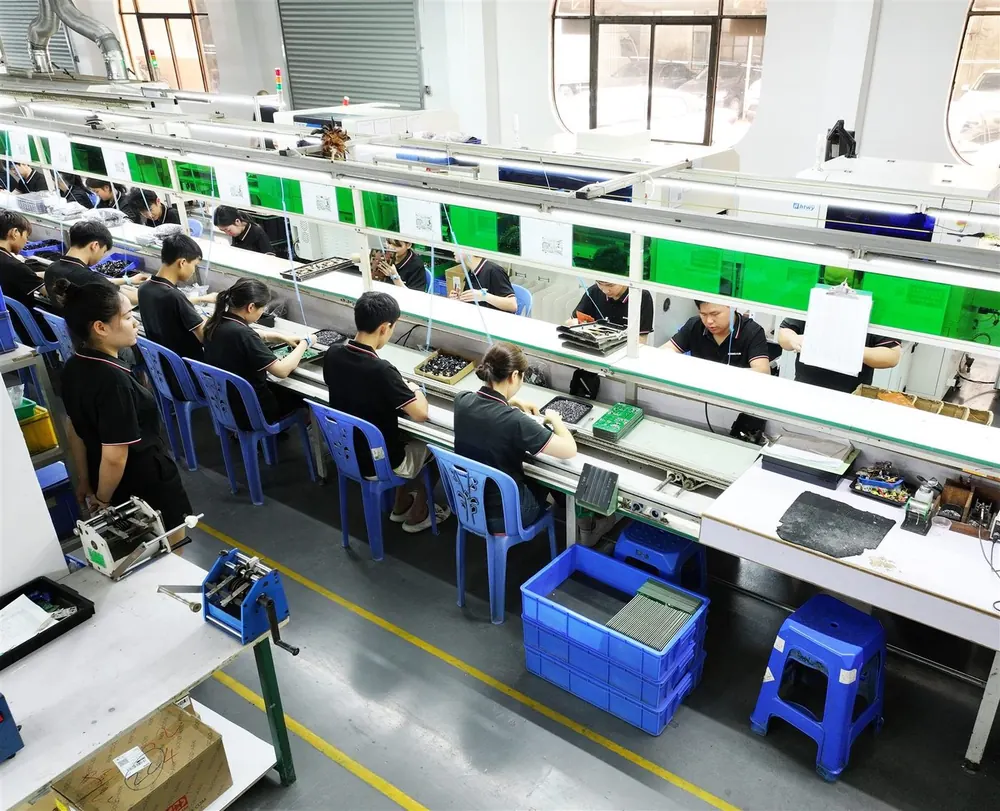
 Where our customers' charger brands are made
FAQ: how to start a phone charger brand
How do I start a phone charger brand?
How much money do I need to start a charger brand?
Which charger should I start with?
Do I need my own charger design?
Do I need to trademark my charger brand?
What certifications does my charger brand need?
Can I sell my charger brand on Amazon?
How long does it take to launch a charger brand?
How much profit can a charger brand make?
What is the minimum order for a private-label charger?
Starting your own charger brand?
Tell us your niche and the market you'll sell in. We'll suggest one or two models to start with, send prices at each quantity step and a free mockup with your logo.
Get a quoteMore from the Rongjun buyer's library
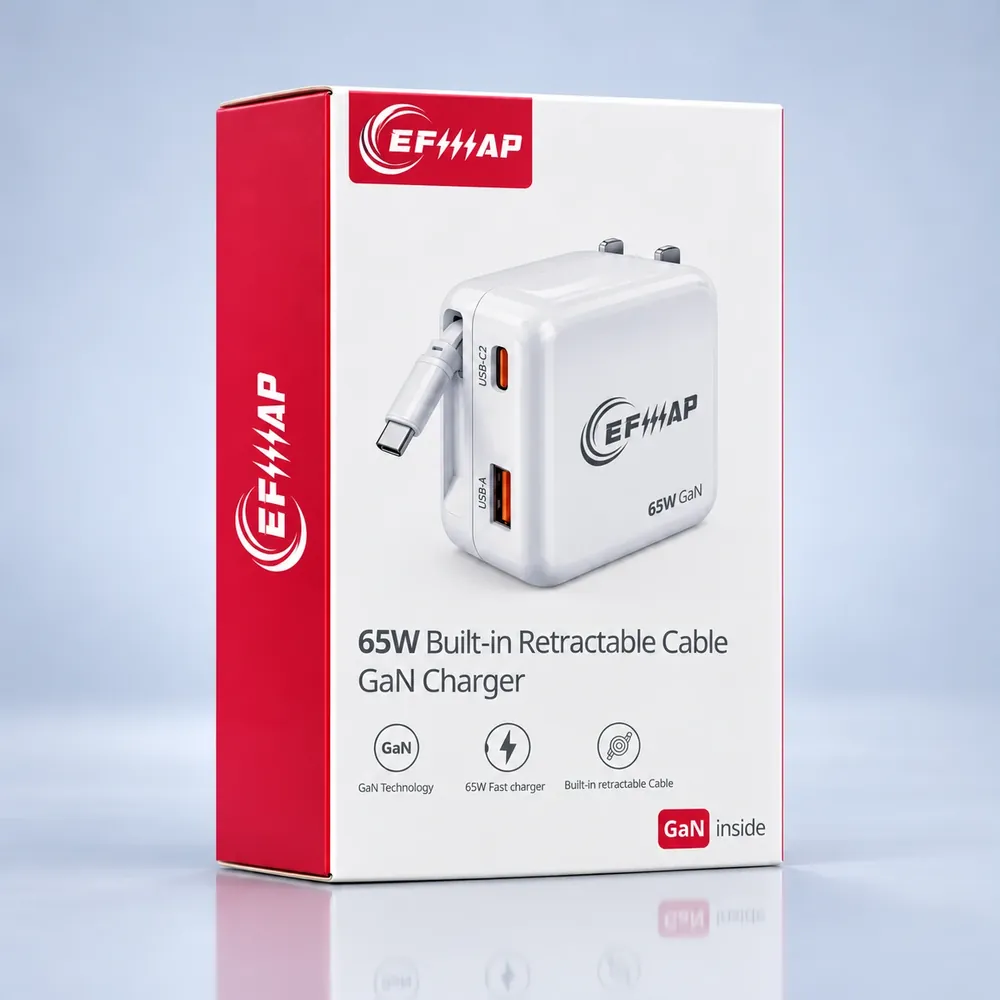
Private label USB-C chargers
Your logo, box and colour on our chargers, from 500 pieces.
How to sell chargers on Amazon
Documents, listings and launch for the channel most brands start on.
The GaN charger market
Three forecasts compared, and what they mean for charger brands.