
How to Sell Chargers on Amazon
Chargers are one of the categories Amazon checks most closely. Here's what its own policy page asks for, what that means for the charger and box you order, and how to launch a listing that lasts.
Most guides on how to sell chargers on Amazon spend a lot of time on account setup and very little on the part that actually stops charger listings: compliance. Amazon has a specific policy page for device batteries and chargers, and if you can't produce what it asks for, the listing comes down.
We make chargers for brands that sell on Amazon, so we see the document requests arrive. This guide starts with Amazon UK's own policy, then works through the product, the listing and the launch. I'm writing from Rongjun, a GaN charger factory in Dongguan.
What Amazon actually requires for chargers
Amazon UK's Seller Central page "Device batteries and chargers" defines a mobile phone wall charger as an external charger that takes power from an AC wall outlet and charges a device through a USB port or a built-in cable. For those, and for laptop chargers, Amazon requires testing to BS EN 62368-1 or the Low Voltage Directive. Car chargers are covered by the EMC Directive.
The same page says your detail page must show the model, part or item number, and that you must be able to submit:
- A Declaration of Conformity, issued by the manufacturer, brand owner or importer, with the name, function and signature of the person responsible.
- Test reports from an ISO 17025-accredited laboratory showing the product meets those standards.
- Images of the model number, the name and address of the manufacturer, importer, distributor or authorised representative, product labels, compliance markings, hazard warnings, instructions and the CE or UKCA mark.
Amazon also asks that the images show the product is the same one that was tested, and that instructions and warnings are in the language of the country of sale. BellaVix's electronics guide adds a useful warning: Amazon won't accept reports from a factory's own non-accredited lab.
The documents, and who provides each one
| Amazon asks for | Who provides it | What to check |
|---|---|---|
| Safety test report (EN 62368-1) | The factory | Exact model number; ISO 17025-accredited lab; whose name is on it |
| EMC test report | The factory | Same model list as the safety report |
| Declaration of Conformity | Manufacturer, brand owner or importer | Lists the rules and standards, signed and dated |
| Importer / manufacturer name and address on product or box | You supply it, the factory prints it | Visible in your photos |
| CE (or UKCA) mark, model number, ratings on the charger | The factory | Permanent, legible, matches the report |
| Instructions and warnings in the local language | You write or approve, the factory prints | One per market you sell in |
Our test reports carry our name as applicant and manufacturer, and you can see the list on our certifications page. When you order, ask the factory for the reports of the exact model before production, and check the lab's accreditation on the report itself.
The photos Amazon asks for (plan them before production)
This is the practical tip most sellers learn the hard way: Amazon's compliance photos are photos of things that are printed on the charger and the box at the factory. If they're missing, you can't fix it in a photo studio. Before you approve the order, make sure these are on your artwork:
- Model number and electrical ratings on the charger label.
- CE mark (and UKCA if you choose to use it), plus the WEEE bin symbol.
- Your company name and address as importer or brand owner, on the charger or the box.
- For EU marketplaces, the EU responsible person's details.
- Warnings and instructions in the language of each country you sell in.
Send these details with your logo and we print them on the charger, the box or a label. If you're starting with plain white boxes, a printed label can carry the importer and responsible-person details.
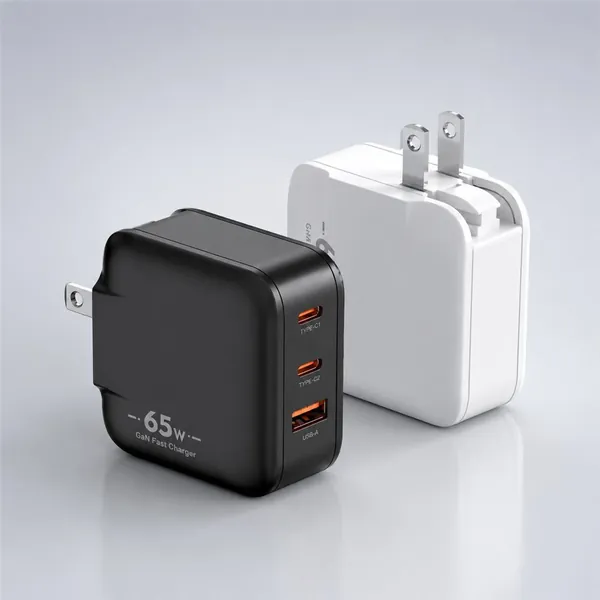
Choosing a charger that survives Amazon
BellaVix makes a sharp point: in electronics, return rates run higher than most categories, and returns kill listings. So the product choice is as much about keeping returns down as about margin.
- Pick a clear use. "65W GaN for laptop and phone" sells and is easy to explain. A generic 20W cube competes only on price.
- Make sure every unit is tested. Early failures become one-star reviews. Every charger we ship goes through a hi-pot test and an aging test under load, and a unit that fails is repaired and tested again before packing.
- Check compatibility yourself. Charge the phones and laptops your buyers own, with the cables they'll use, and write down which ones fast-charge.
- Keep it small. Smaller chargers mean lower fulfilment fees and better photos next to the competition.
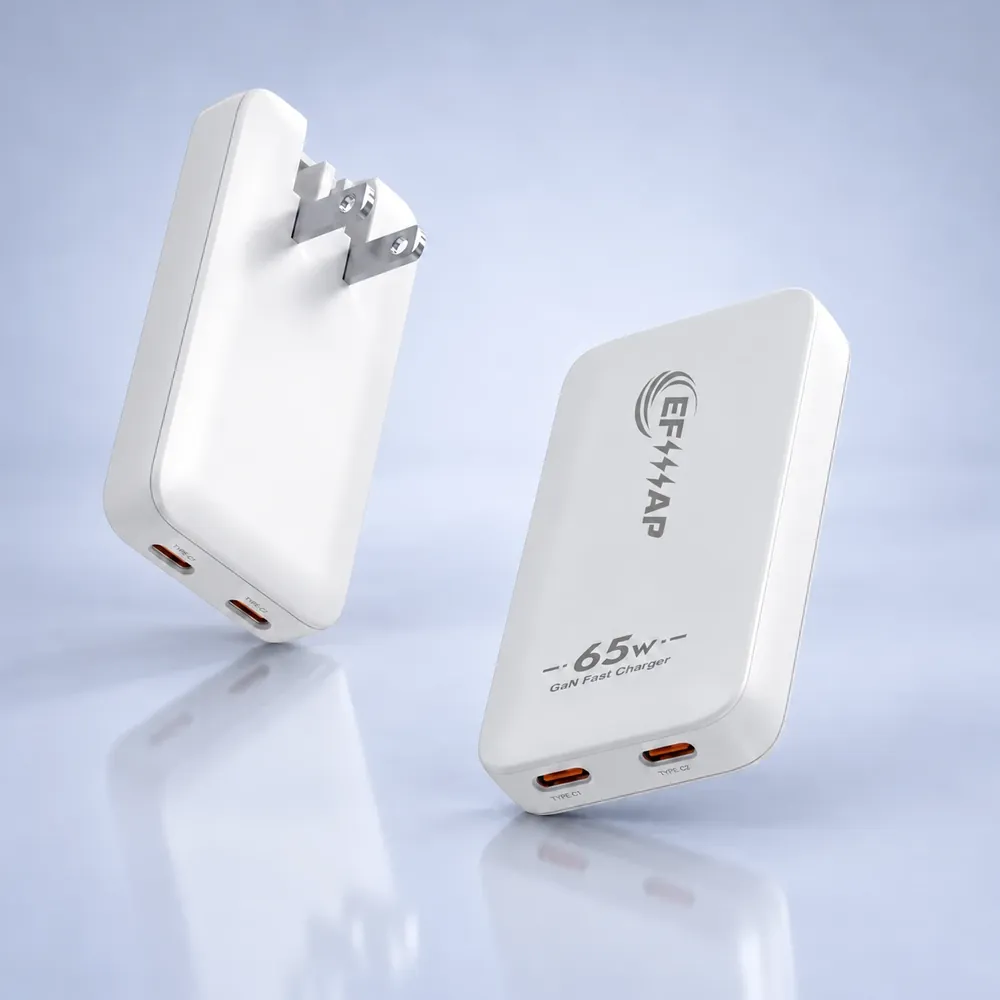
Good starting points from our range: the 65W GaN chargers for laptop-and-phone buyers, the XFC 35W dual USB-C for phone buyers, and the CB ultra-thin series with clip-on plugs for travel listings.
Writing the listing
Title
Brand, wattage, technology, port layout and the main devices, in plain words. For example: "[Brand] 65W GaN USB-C Charger, 3-Port PD Fast Charger for MacBook Air, iPhone, Galaxy". Keep the model number in the listing too, as Amazon requires.
Bullets
- What it charges at full speed, and what it doesn't (be honest; it cuts returns).
- Size compared with something familiar.
- Ports and how power is shared when several devices are plugged in.
- Safety: tested to EN 62368-1, protections against over-voltage, over-current, overheating and short circuit.
- What's in the box (cable or no cable) and your warranty.
Images
A clean main image, a size comparison, a "what it charges" image, a ports-and-power image, a lifestyle shot, and a close-up of the label with the model number and marks. That last one does double duty for compliance.
FBA or fulfilling yourself
For chargers, Fulfilment by Amazon is usually the easier start. They're small and light, so fees per unit are modest, and the Prime badge matters to buyers. Fulfilling yourself (FBM) makes more sense once you have your own warehouse and steady volume. Use Amazon's own fee calculator with your real dimensions and weight; fees change, and BellaVix's example figures are for the US site.
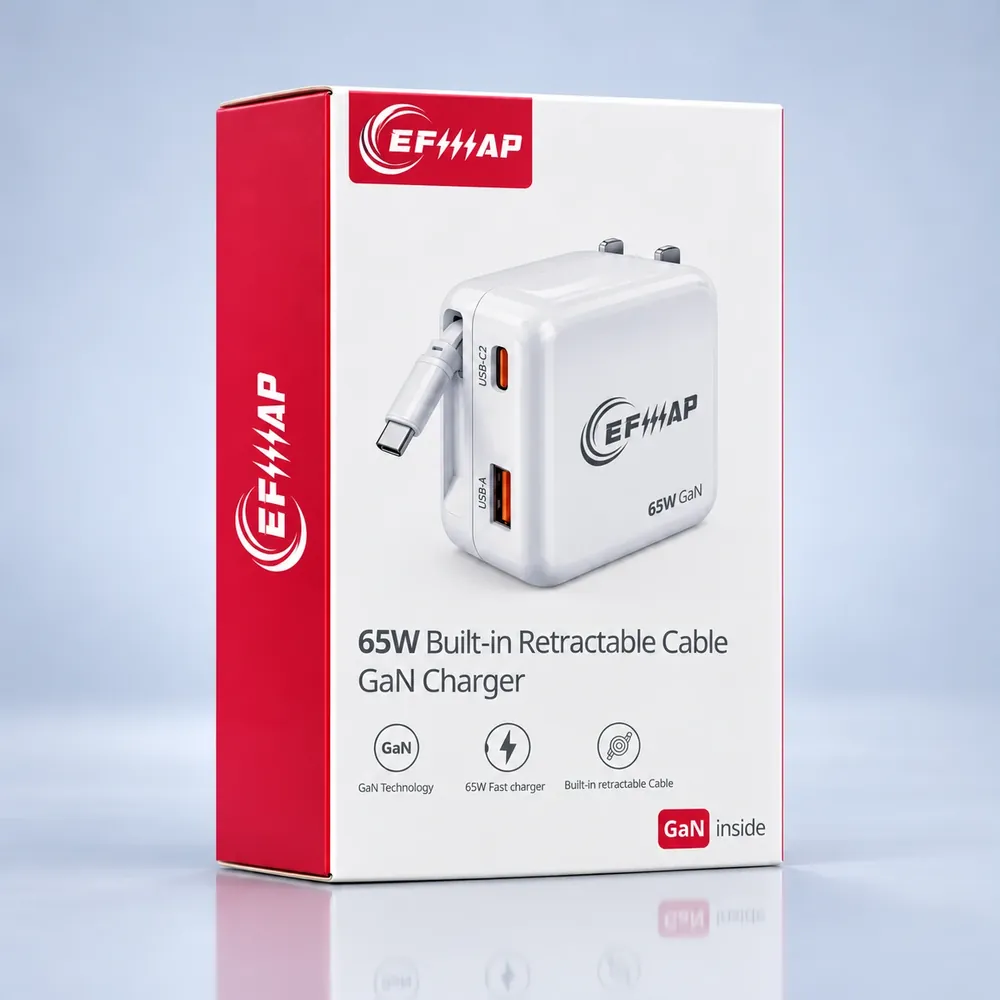
One packaging tip: Amazon's fulfilment fees depend on size and weight, so a slim retail box can cost less to fulfil than a bulky one. Check the fee band before you sign off the box design.
Launch: reviews, ads and returns
BellaVix expects advertising in electronics to cost more than people think. Plan for it. A sensible launch looks like this:
- Start with a modest daily ad budget on automatic campaigns, then move spend to the search terms that actually convert.
- Use Amazon's own review programmes and the "Request a Review" button. Never offer anything in exchange for reviews.
- Watch the return reasons weekly. "Doesn't charge my laptop fast" means the listing needs to be clearer, not that the charger is broken.
- Reorder before you run out. Running out of stock costs you ranking that takes weeks to rebuild. Our production is 10 to 15 days for 1,000 pieces, plus shipping.
Brand Registry and protecting the listing
Amazon Brand Registry needs a registered or pending trademark. It gives you more control over your listing, better content options and tools to report copies. Since many factories also sell on Amazon (BellaVix warns about this), a registered brand and your own packaging matter more in chargers than in most categories. Our charger brand guide covers the trademark step.
Selling on Amazon's EU marketplaces
The EU marketplaces ask for the same kind of safety documents, plus the EU-specific items: CE marking, an EU responsible person under GPSR shown on the product or packaging, and WEEE and packaging registrations in each country where you store or sell stock. Our European certifications guide lists them.
Selling on Amazon US
For the US, chargers need FCC compliance as unintentional radiators under Part 15. One competitor guide says FCC only applies to wireless products; for mains chargers that isn't correct. Amazon US and most retailers also expect UL or ETL safety testing. Our US certification guide covers it.
 Where Amazon sellers' chargers are made: our factory in 29 seconds
FAQ: how to sell chargers on Amazon
How do I sell chargers on Amazon?
What documents does Amazon need to sell a phone charger in the UK?
Do I need approval to sell chargers on Amazon?
Does a USB charger need FCC to sell on Amazon US?
Can I use the factory's test reports for Amazon?
Which charger sells best on Amazon?
Should I use FBA for chargers?
Do I need a trademark to sell chargers on Amazon?
How do I reduce returns on chargers?
What about selling chargers on Amazon in the EU?
Can I sell private label chargers on Amazon?
Selling chargers on Amazon?
Tell us the marketplace and the model you're considering. We'll send the test reports for that model and tell you what details we need for the box and label.
Get a quoteMore from the Rongjun buyer's library
How to start a phone charger brand
Niche, first product, budget and pricing for a new brand.
Private label USB-C chargers
Your logo, box and colour on our chargers, from 500 pieces.
Private label vs white label
What each really means at a charger factory, and which to choose.