Private Label vs White Label: A Charger Factory's View
What the two terms mean in general, what they really mean when you order chargers or electronics from a factory, and how to choose.
Most articles on private label vs white label use snacks, mugs or T-shirts as examples. That's fine for the basic idea, but chargers and other electronics add things a coffee mug doesn't have: safety testing, certificates in the right name, and electronics that you can't see from the outside.
We make GaN chargers in Dongguan for more than 200 brands, and we use both terms every day. So here's the general definition, and then what it actually means when you order chargers from a factory like ours.
The usual definitions
The guides that rank for this question mostly agree. Shopify's version is a good summary: white label products are generic and can be sold by many retailers, while private label products are made for one company, often with an exclusivity agreement. ThatCompany puts it in one line that we like: the difference is who specifies what the product contains.
| White label | Private label | |
|---|---|---|
| Who decides the product | The manufacturer | The brand |
| Sold to | Many brands | One brand |
| What you change | Label and maybe packaging | Specifications, branding, packaging |
| Speed to market | Fast | Slower: samples and approvals |
| Upfront cost | Low | Higher |
| Can competitors sell the same thing? | Yes | Not the same product |
Gembah adds a useful warning about white label: with nothing unique about the product, it's easy for competitors to sell the same thing, and price competition tends to get worse over time.
How the terms work for chargers
Here's where it gets less tidy. In the charger industry, factories use "private label" for something closer to the white label definition above. When a factory, including us, offers a private label charger, it usually means:
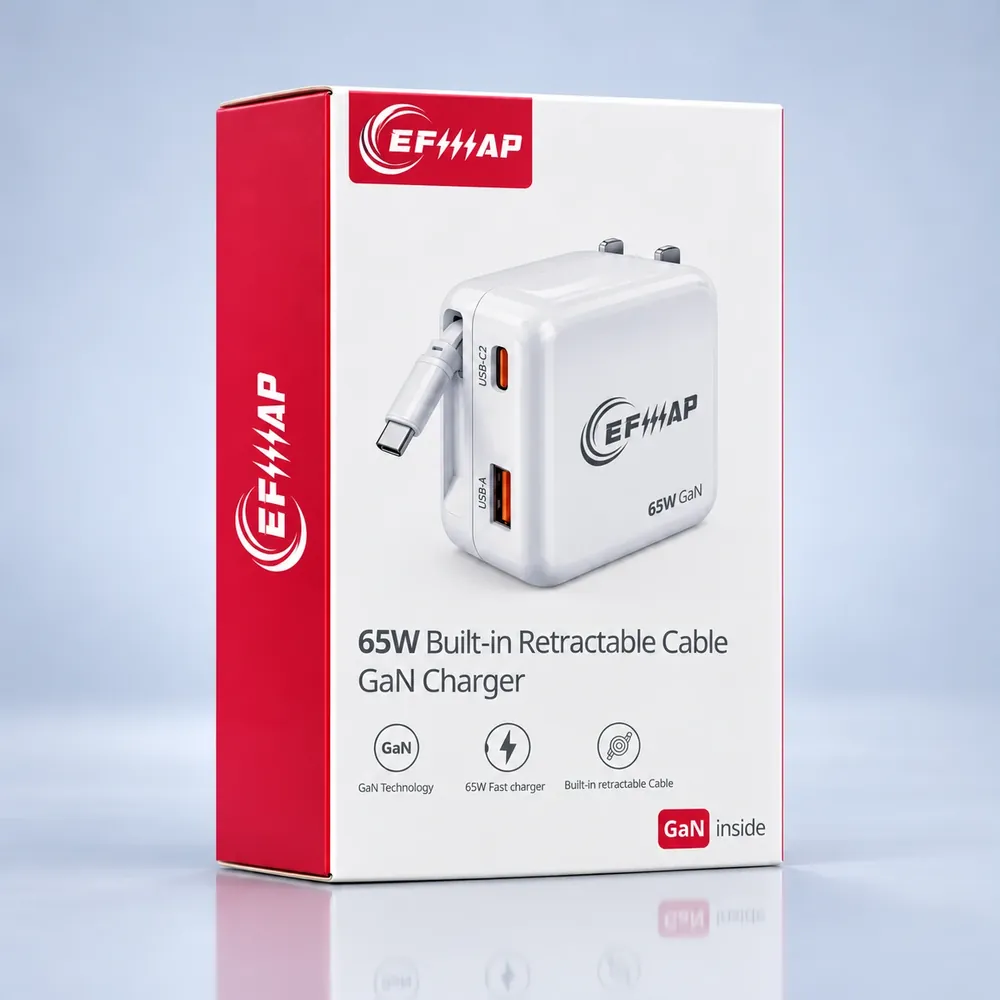
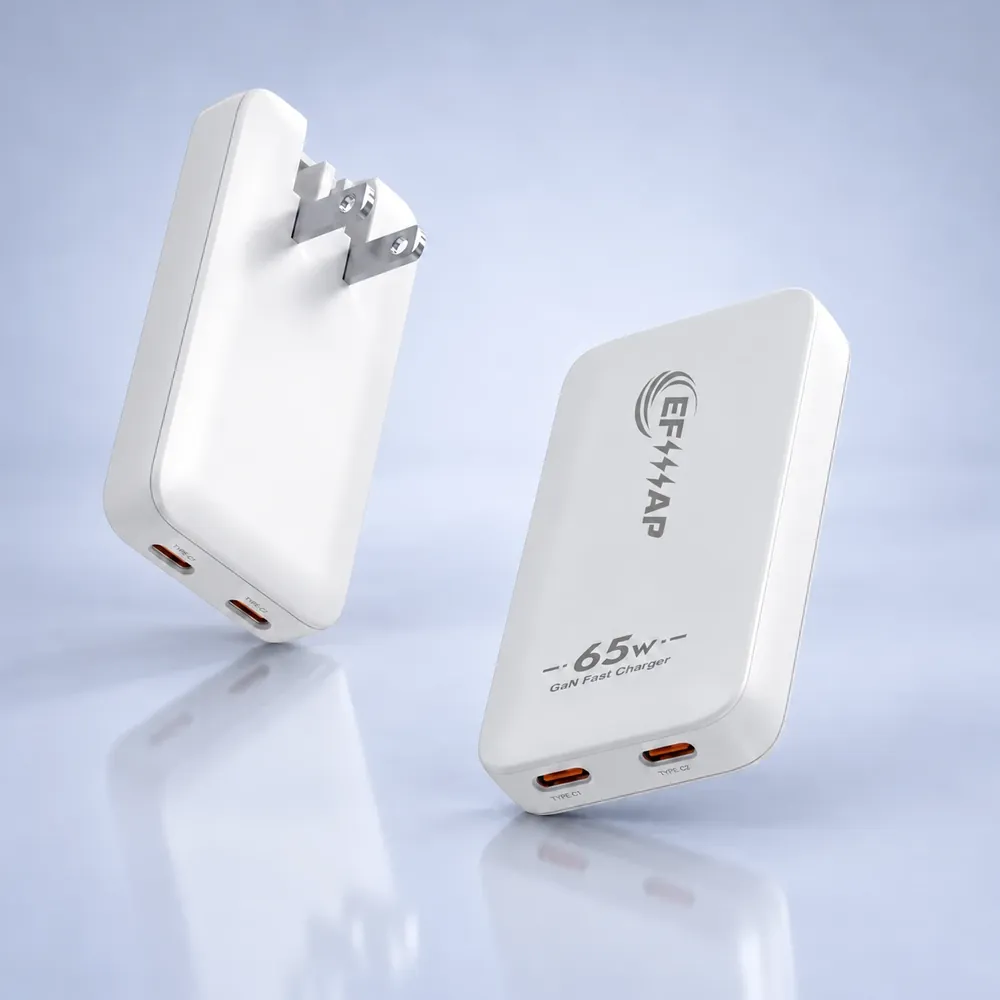
- one of the factory's existing models, with its mould, electronics and test reports already done;
- your logo printed or laser engraved on the housing;
- your choice of plug, and at higher quantities your housing colour and retail box.
The inside of the charger is the same as the factory sells to other brands. What's yours is the look, the packaging and the brand. That's not a bad thing: it's exactly why you can start at 500 pieces with no tooling cost, using a design that's already been tested. But it's worth being clear about it, because a buyer who expects an exclusive product may be surprised to find a similar charger under another brand.
A charger that is exclusive inside and out is a new design, which factories call ODM. We explain the difference in detail in OEM vs ODM chargers.
Four levels, from generic to exclusive
Rather than two boxes, it's more useful to think of four levels. Here's how they work with us:
| Level | What you get | Minimum | Exclusive? |
|---|---|---|---|
| 1. Neutral / generic | Existing model, no brand | Ask us | No |
| 2. Your logo | Existing model, your logo, your plug | 500 pcs (300 on request) | Branding only |
| 3. Your logo, colour and box | Level 2 plus Pantone colour and printed retail box | 1,000 pcs | Branding and look |
| 4. Your own design (ODM) | New housing, ports, power or settings | 5,000 pcs | Yes |
Levels 1 and 2 are what the generic guides call white label. Level 4 is private label in the full sense. Level 3 sits in between, and it's where many charger brands live for years: the product looks clearly theirs on the shelf and on Amazon, without the cost of a new mould.
Costs follow the same pattern. Your logo has no setup fee. A printed box and a custom colour add a per-piece cost, and the colour becomes free from 3,000 pieces. A new design adds a mould, engineering and new testing, quoted per project. Our guide to how much a custom charger costs has the real prices.
What you control at each level
| Decision | Levels 1 and 2 | Level 3 | Level 4 (ODM) |
|---|---|---|---|
| Logo | Level 2 only | Yes | Yes |
| Plug type | Yes | Yes | Yes |
| Housing colour | Black or white | Any Pantone | Any |
| Retail box | Plain | Your design | Your design |
| Shape and size | No | No | Yes |
| Ports and power | Choose a model | Choose a model | Yes |
| Charging settings | No | No | Yes |
One thing you control at every level is the quality bar. Agree the inspection standard and the documents before you order, whatever level you choose. With us, every charger is hi-pot and aging tested, any unit that fails is repaired and retested on the spot, outgoing inspection uses AQL 0, 0.65 and 1.5, and the warranty is 24 months.
Certification: the part generic guides miss
With a mug or a T-shirt, the label is mostly a marketing decision. With a charger, it's also a legal one. The brand or importer that places a charger on the market has duties that the factory can't take over:
- In the EU and UK, the Declaration of Conformity, the technical file and the name and address on the product. See certifications for Europe.
- In the US, the FCC declaration by a responsible party in the US, and usually a UL or ETL listing for retail. See US certification requirements.
On levels 1 to 3, the factory's existing test reports for that model are your starting point, which saves a lot of time and money. On level 4, the new design needs its own testing. Either way, ask for the reports by model number and check that the model on the report matches the model on your label.
Selling on Amazon
On Amazon, the difference between white and private label shows up quickly. If several sellers list the same generic charger with only a different logo, buyers compare them on price and reviews, and the cheapest usually wins. Gembah makes the same point: white label makes it easier to become interchangeable.
A charger with your own colour, box and listing photos is easier to tell apart, even when the electronics are shared. And because your logo is on the product itself, not just a sticker, it's clearly your brand in the customer's hand. Our guide on selling chargers on Amazon covers the documents and photos Amazon asks for.
Questions to ask a factory before you choose
Because factories use these words loosely, don't rely on the label "private label" or "white label" in a quotation. Ask what it includes:
- Is this an existing model? If yes, ask for its model number and test reports. If no, ask what development and testing it needs, and who pays for it.
- Do other brands buy the same model? An honest factory will say yes for an existing model. If you need exclusivity, ask what it would take and get it in writing.
- How is the logo applied? Printing, laser engraving or a sticker look and wear differently. Ask for a mockup and a sample with your logo.
- What changes the minimum order? Box, colour and new moulds usually do. Ask for each one separately.
- Will the parts stay the same? Ask the factory not to change critical components without telling you, because your test reports depend on them.
Which to choose
Start with your logo on an existing model (level 2) if you're testing a market, want to keep your first order small, or need stock quickly. You get a tested product and free logo setup from 500 pieces.
Move to level 3 when a model sells well enough to reorder 1,000 pieces. A retail box and your own colour make the product look like yours, and that matters more as competitors appear.
Go to your own design (level 4) when you know the volume is there, you have a clear product idea nobody else offers, and you can order 5,000 pieces. Our custom charger design guide explains the process.
Whichever you choose, the private label vs white label question matters less than the factory behind it. A well-tested existing model with your logo will serve your brand better than an exclusive design from a supplier you can't check.
 How our private label chargers are made
FAQ: private label vs white label
What is the difference between private label and white label?
Is private label better than white label?
What does private label mean for chargers?
Is a private label charger exclusive to my brand?
What is the MOQ for private label chargers?
Who is responsible for certification on a private label charger?
Is white label the same as unbranded?
Can I switch from white label to private label later?
Ready to put your brand on a charger?
Tell us the model and your logo. We'll send a free mockup and a sample with your logo, ready in about three days.
Get a quote